
Engineering Precision: The Core Architecture of Modern Dental Micromotors
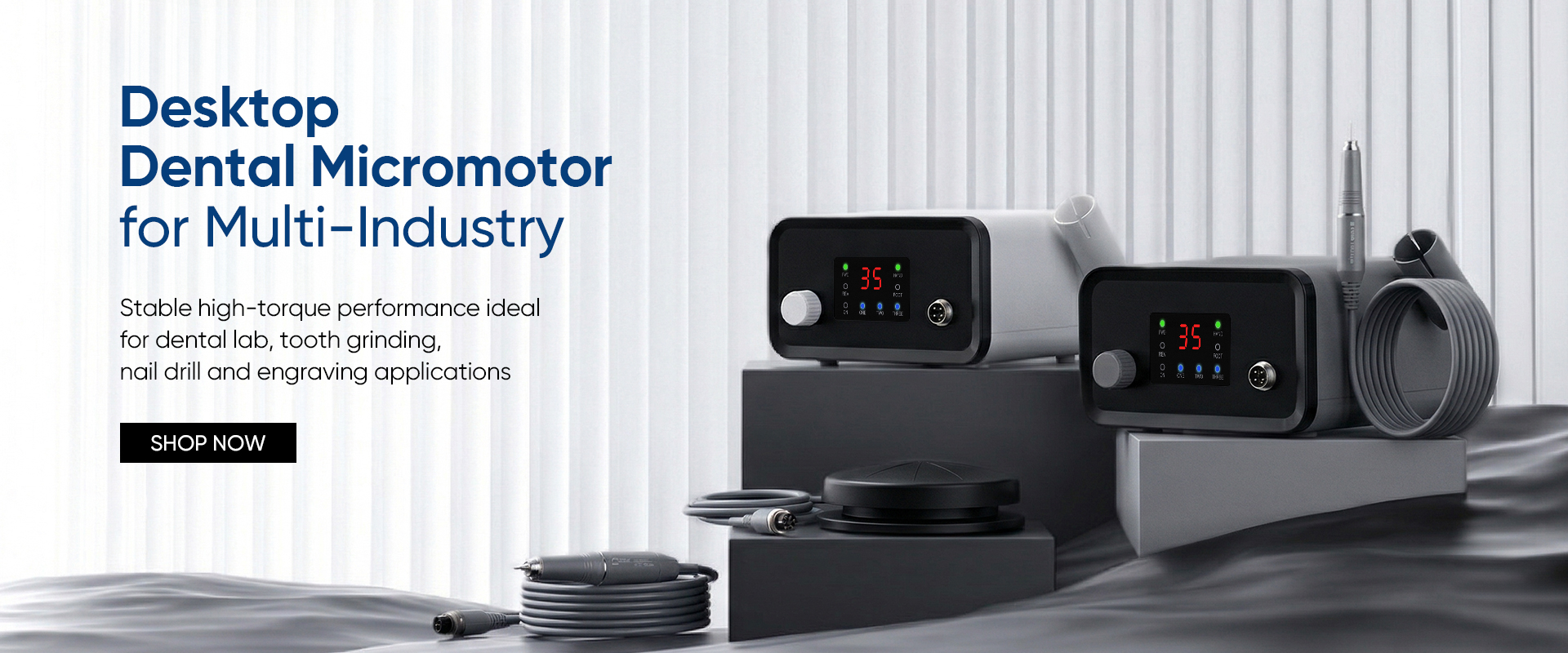
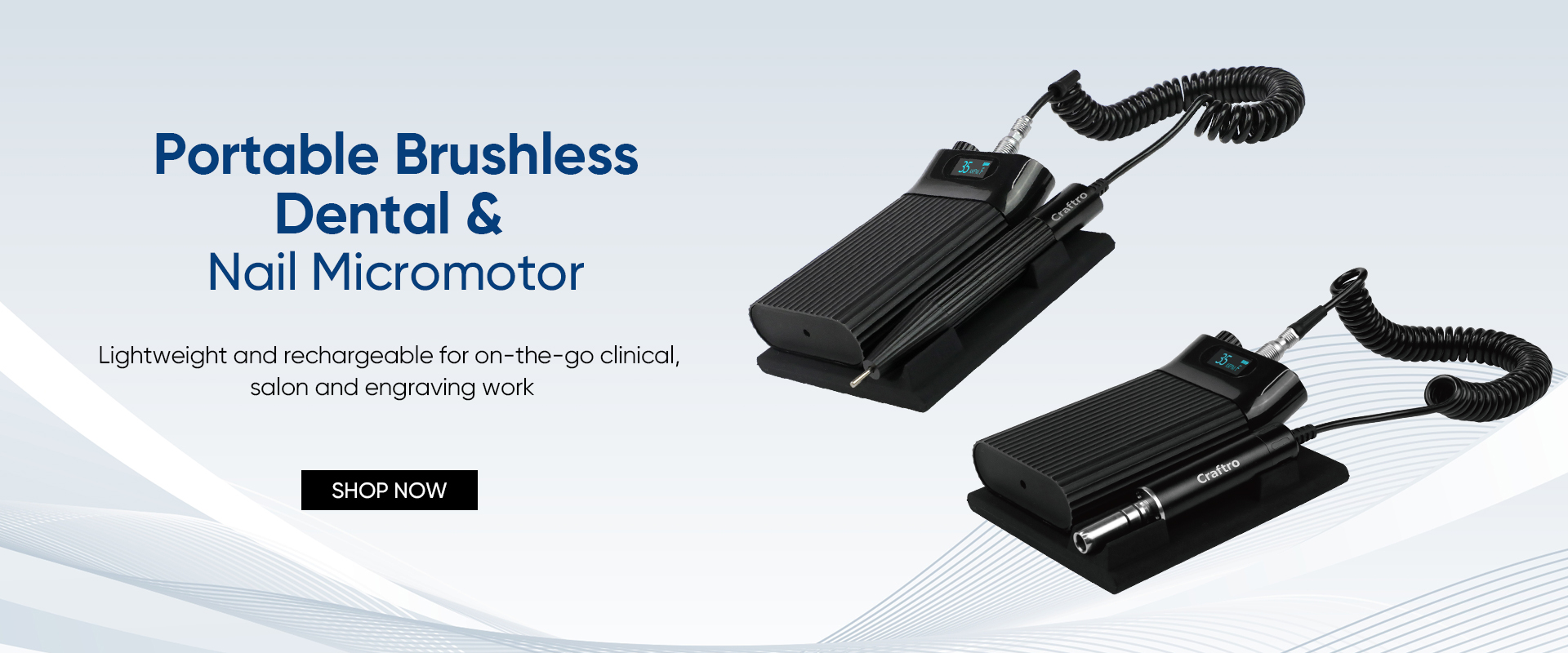
At the core of contemporary minimally invasive and high-efficiency dentistry lies the advanced dental micromotor. As a manufacturer operating within a 9,000 m² National High-Tech Enterprise facility, Shanghai Craftro Tech Co., Ltd. approaches these systems not as simple handpiece drivers, but as integrated electro-mechanical platforms where performance is dictated by the synergy of brushless motor design, digital control algorithms, and thermal management. The shift from traditional brushed to brushless DC (BLDC) motors, exemplified by our VK-MM series, represents a fundamental leap in reliability and power density. The elimination of physical commutators and brushes removes the primary source of particulate contamination, mechanical wear, and electrical arcing. This architectural change directly translates to extended service intervals, consistent torque output across the motor’s lifespan, and the ability to sustain higher rotational speeds without degradation.
Sustained Torque at 50,000 RPM: The VK-MM2/VK-MM5 Performance Benchmark
The specification of 50,000 RPM is a critical performance threshold for modern high-speed preparation and finishing. However, the nominal maximum speed is a less informative metric than the system’s ability to maintain applied torque at that speed under load. The VK-MM2 and VK-MM5 micromotors are engineered to deliver this performance through a combination of high-efficiency neodymium magnet rotors and low-loss laminated stators. The key differentiator is the closed-loop digital controller, which continuously monitors back-EMF to precisely adjust phase current in real-time. When a bur encounters denser dentin or composite, the controller instantaneously increases power delivery to maintain set speed, preventing the stalling or significant slowdown common in open-loop or analog systems. This results in a smoother cutting experience, reduced operator fatigue, and predictable material removal rates.
Thermal Dynamics and Heat Dissipation in Prolonged Procedures
A micromotor sustaining 50,000 RPM generates significant thermal energy. The engineering priority is not merely to withstand this heat but to efficiently channel it away from the handpiece interface and the motor’s own windings. The VK-MM5 incorporates a multi-path cooling strategy: an aluminum alloy housing acts as a primary heat sink, internal thermal conductive pads transfer heat from the stator assembly to the housing, and optimized internal airflow is managed by the impeller design of the rotor itself. This ensures that external surface temperatures remain within safe operational limits during extended clinical use, protecting both the device’s electronic components and ensuring patient comfort by minimizing heat transfer through the handpiece.
Digital Control Integration: From RPM to Adaptive Feed-Forward Algorithms
Modern micromotors like the VK-MM series are defined by their software as much as their hardware. The embedded digital signal processor (DSP) does more than regulate speed; it implements adaptive control algorithms. These algorithms can identify the load characteristic (e.g., light milling vs. heavy grinding) and pre-emptively adjust power delivery, enhancing efficiency and protecting against sudden jams. Furthermore, this digital core enables precise interfaces with dental unit networks, allowing for programmable speed presets, real-time performance logging for maintenance forecasting, and firmware updates that can enhance performance or add features post-deployment. This transforms the micromotor from a standalone tool into a node in a digitally integrated operatory.
Vibration Damping and Ergonomic Noise Reduction
Performance at 50,000 RPM must be balanced with ergonomic refinement. Excessive vibration contributes to operator hand fatigue and can negatively impact fine control. The precision balancing of the VK-MM rotor assembly is performed to sub-micron tolerances, minimizing inherent mechanical vibration. Additionally, the electronic controller employs sinusoidal drive technology rather than traditional trapezoidal commutation. This results in smoother magnetic field transitions during rotation, significantly reducing audible noise and high-frequency vibration, which is perceived as a smoother, more refined handpiece operation.
Sterilization Resilience and Mechanical Sealing Protocols
As a factory producing medical devices, we engineer the VK-MM micromotors to survive rigorous clinical sterilization cycles. This involves more than basic ingress protection. O-rings and shaft seals are manufactured from autoclavable, chemical-resistant fluorocarbon elastomers. Motor bearings are sealed and lubricated with high-temperature medical-grade grease. The internal PCB assemblies are conformally coated to protect against humidity ingress over time. Every interface, from the rear cable gland to the front handpiece coupling, is designed as a primary or secondary barrier against fluid intrusion, ensuring the internal brushless motor and electronics remain isolated from the clinical environment.
FAQ
Q: What is the primary advantage of a brushless design in the VK-MM5 over a brushed motor?
A: The brushless design eliminates friction-based wear components (brushes/commutator), providing a minimum 3x longer operational lifespan, consistent torque without power drop-off over time, and zero particulate generation from internal arcing, which is critical for maintaining a clean air drive system.
Q: How is the 50,000 RPM speed maintained under varying load conditions during tooth preparation?
A: The integrated DSP controller uses real-time back-EMF sensing to detect load changes. It dynamically adjusts the three-phase current output within milliseconds, providing constant power compensation to maintain the set RPM, ensuring consistent cutting efficiency regardless of tissue density.
Q: What type of maintenance is required for these high-speed micromotors?
A: Routine maintenance is significantly reduced. Primary protocols involve external cleaning and lubrication of the handpiece coupling as per handpiece instructions. The sealed brushless motor unit itself requires no internal lubrication or brush replacement. Periodic professional servicing should focus on seal integrity and connector inspection.
Q: Are the VK-MM2 and VK-MM5 compatible with all standard dental handpieces?
A: They are engineered to ISO 3964 and ISO 9168 standards for dental handpiece couplings, ensuring compatibility with the vast majority of standard friction-grip and latch-type handpieces. Always verify handpiece manufacturer speed ratings to match the micromotor’s output capability.
Q: What power input is required, and how is torque delivered at low speeds?
A: The systems typically operate on 24-36V DC input. The brushless motor and controller provide high torque across the entire speed range, including at low RPMs (e.g., 1,000-10,000 RPM), which is essential for implantology and surgical procedures. This is achieved through high-resolution current control in the motor windings.