
Core Motor Technology: The Shift to Brushless DC Systems
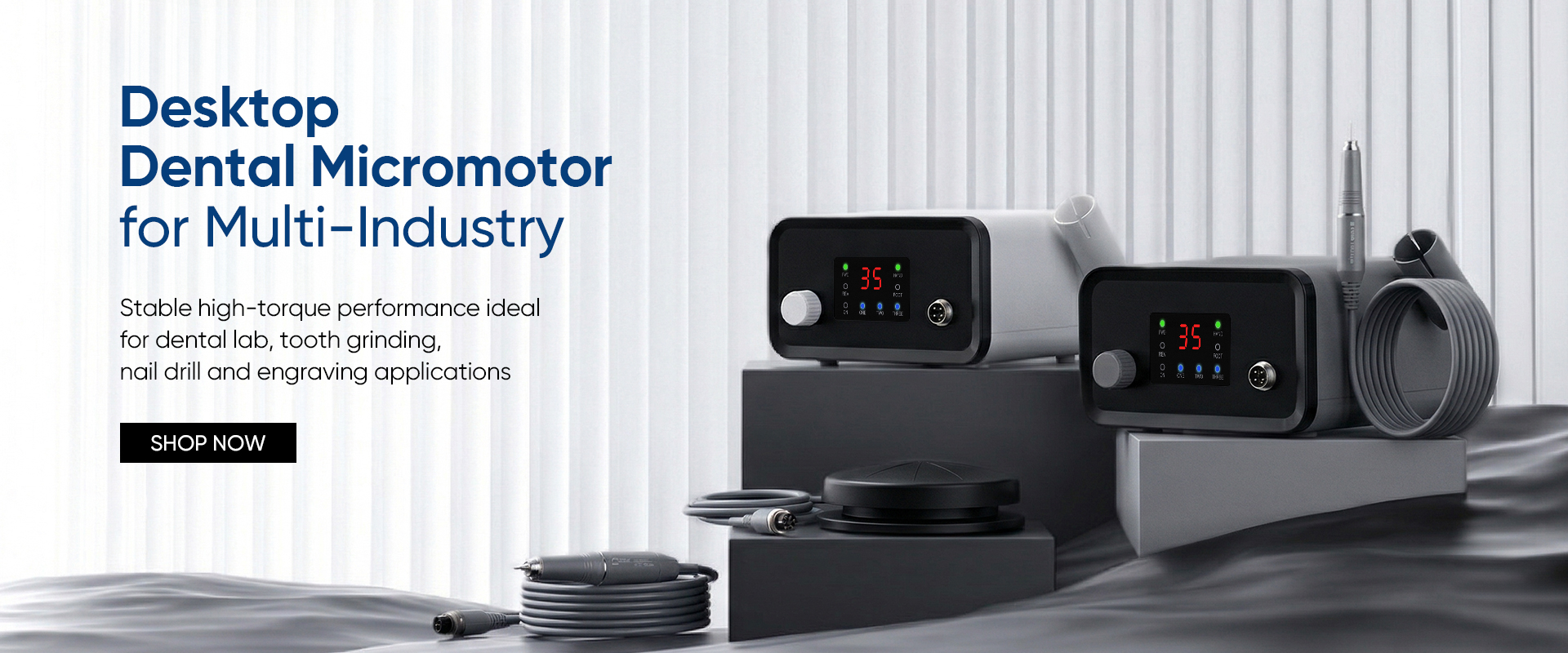
The evolution of the professional nail drill machine is fundamentally a story of motor advancement. The transition from traditional brushed DC motors to sophisticated Brushless DC (BLDC) systems, as exemplified in our VK-MM series, represents a paradigm shift in performance and reliability. A brushed motor operates with physical carbon brushes that contact a spinning commutator, creating friction, electrical arcing, and inevitable wear. This design ceiling limits maximum safe rotational speed, generates significant heat and vibration, and necessitates frequent maintenance.
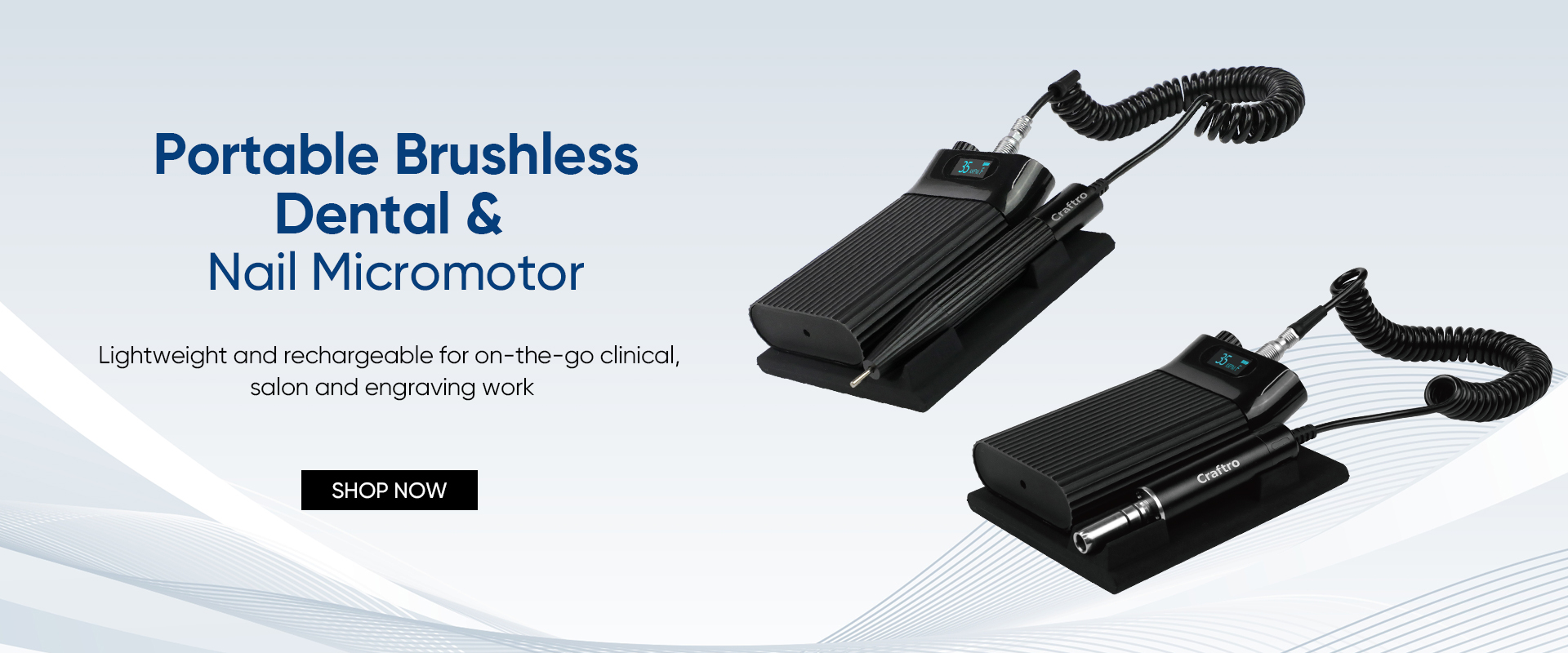
In contrast, a BLDC motor, such as the one engineered into the VK-MM2 and VK-MM5, eliminates all physical commutators and brushes. The “commutation”—the switching of current that causes the rotor to turn—is managed electronically by a dedicated microcontroller. This architecture delivers direct, measurable advantages: the elimination of brush friction allows for sustained operation at true 50,000 RPM with minimal thermal buildup, while the absence of arcing components drastically reduces electromagnetic interference (EMI) on the power circuit. The result is a professional nail drill machine with superior torque consistency across the entire speed range, extended operational lifespan exceeding 2,000 hours, and a notably quieter, smoother tactile feedback critical for precision work.
Dynamic Performance Metrics: Analyzing 50,000 RPM Operational Integrity
The specification of 50,000 RPM (Revolutions Per Minute) is a critical performance benchmark, but its true value is realized only through stable delivery under variable load conditions. A common industry pitfall is the advertisement of a “no-load” peak speed, which precipitously drops when the abrasive bit contacts the nail surface. The engineering challenge is to maintain rotational velocity and torque under this applied load.
Our VK-MM series units address this through a closed-loop feedback system integrated into the BLDC controller. It constantly monitors back-EMF (Electromotive Force) to detect minute changes in rotor position and speed. When load is applied, the system instantaneously adjusts power output to the stator windings, compensating for the drag. This ensures the 50,000 RPM setting is a working speed, not merely an idle specification. Furthermore, stability at this velocity demands exceptional dynamic balancing of the motor rotor and chuck assembly. Imbalance at high frequencies creates harmful harmonics and vibration. Our manufacturing process includes computer-aided balancing, reducing vibration amplitude to below 0.02 mm/s, which is essential for clinician comfort and procedural accuracy during extended use.
Ergonomic & Thermal Management in Sustained Clinical Use
A professional nail drill machine is a tool of prolonged, repetitive use. Its industrial design must therefore be an extension of biomechanical and thermal engineering principles. The handpiece geometry of the VK-MM5 is derived from ergonomic studies, promoting a neutral wrist posture to mitigate cumulative trauma disorders. The housing material is a composite polymer selected for its high strength-to-weight ratio and thermal insulation properties.
Thermal management is a multi-faceted system. Internally, the efficient BLDC motor is the first line of defense, generating less waste heat than its brushed counterparts. Secondary heat from the windings and driver circuitry is dissipated via a strategically designed internal airflow channel that isolates heated components from the handpiece shell. This passive cooling is augmented by material selection; aluminum alloy heat sinks are bonded to critical components, conducting heat away from user contact points. This systemic approach ensures the external surface temperature remains within a safe and comfortable range even during continuous, high-torque operations, a non-negotiable requirement for a professional-grade device.
Electronic Control Systems: Precision, Safety, and Feedback
The user interface of a modern professional nail drill machine—the speed dial, forward/reverse switch, and LED indicators—is merely the surface layer of a complex electronic control unit (ECU). The ECU in the VK-MM2/5 platform is built around a 32-bit ARM Cortex-M series microcontroller. This processor executes the motor control algorithms (Field-Oriented Control for optimal efficiency), manages the pedal input, and governs all safety protocols.
Key electronic features include constant torque output across the speed range, soft-start and soft-stop functionality to prevent bit “jumping,” and a comprehensive fault detection suite. This suite monitors for over-current, over-temperature, and rotor stall conditions, instantly cutting power and providing diagnostic feedback via LED codes. The precision of speed control is paramount; our digital potentiometer provides a linear, jitter-free signal, allowing for reproducible speed settings with a tolerance of ±2%. This level of electronic control transforms the device from a simple rotary tool into a predictable, clinical instrument.
Manufacturing Tolerances and Component Integration
The performance ceiling of any electromechanical device is defined by the precision of its lowest-tolerance component. In a professional nail drill machine, the critical interface is the chuck assembly. Our standard 3/32″ (2.35mm) collet chuck is machined from stainless steel with a concentricity tolerance of less than 0.005mm. This extreme precision ensures that any compatible bit runs true without axial or radial wobble, which is the primary cause of uneven filing, nail plate trauma, and excessive bit wear.
This precision extends to the gearbox (where applicable for specific torque profiles) and the motor bearing assembly. Sealed, pre-lubricated ceramic ball bearings are used for their durability, corrosion resistance, and ability to maintain performance at high rotational speeds. Component integration follows a modular design philosophy. The motor, control board, chuck assembly, and housing are discrete, serviceable modules. This not only streamlines assembly in our 9,000 m² automated facility but also ensures reliable field maintenance and long-term device sustainability, reducing total cost of ownership for the professional user.
Technical Specifications and Compliance Framework
A professional nail drill machine is a Class I medical device in most jurisdictions, and its design is constrained by a rigorous compliance framework. The VK-MM series is engineered to comply with IEC 60601-1 (Medical Electrical Equipment Safety) and IEC 60601-1-2 (Electromagnetic Compatibility). This dictates every aspect, from creepage and clearance distances on the PCB to the use of medical-grade, biocompatible plastics that are resistant to autoclave sterilization chemicals.
Electrical isolation is paramount. The design incorporates reinforced insulation between all user-accessible parts and the mains voltage components, withstanding HIPOT (High-Potential) tests at 4,000 VAC. The power supply is a certified, low-leakage (<100 µA) adapter, ensuring patient and operator safety. These specifications are not optional additions; they are the foundational engineering constraints that separate a professional, salon-grade device from a consumer commodity, ensuring safety and reliability in daily professional use.
FAQ
Q: What is the primary advantage of a brushless motor in a nail drill beyond speed?
A: The core advantages are longevity and consistent torque. Without brushes to wear out, the motor’s operational life is extended by multiples. Furthermore, electronic commutation provides optimal torque delivery at any speed, preventing the “bogging down” common under load with brushed motors.
Q: Why is speed stability under load more important than maximum RPM?
A: A stable speed ensures consistent material removal and predictable performance. A drill that slows significantly under load requires the technician to compensate with increased pressure, leading to loss of control, heat generation, and potential nail damage. True professional-grade machines maintain set RPM within a narrow band.
Q: How does chuck precision impact clinical outcomes?
A: An imprecise chuck causes bit runout (wobble). This creates uneven filing surfaces, increases vibration transferred to the client’s nail and finger, and can cause micro-trauma to the nail plate. High concentricity ensures smooth, predictable, and safe abrasion.
Q: What does compliance with IEC 60601-1 mean for the end user?
A> Compliance certifies that the device has been designed and tested to stringent international safety standards for medical electrical equipment. It verifies protection against electric shock, mechanical hazards, excessive temperatures, and confirms rigorous risk management processes were followed during development, providing a verifiable safety assurance.
Q: Can the thermal management system handle continuous use during back-to-back appointments?
A> Yes, a properly engineered system is designed for duty cycle, not intermittent use. The combination of a high-efficiency BLDC motor, internal heat dissipation pathways, and insulating materials allows for continuous operation without the handpiece surface becoming uncomfortably hot, which is essential for professional salon environments.