

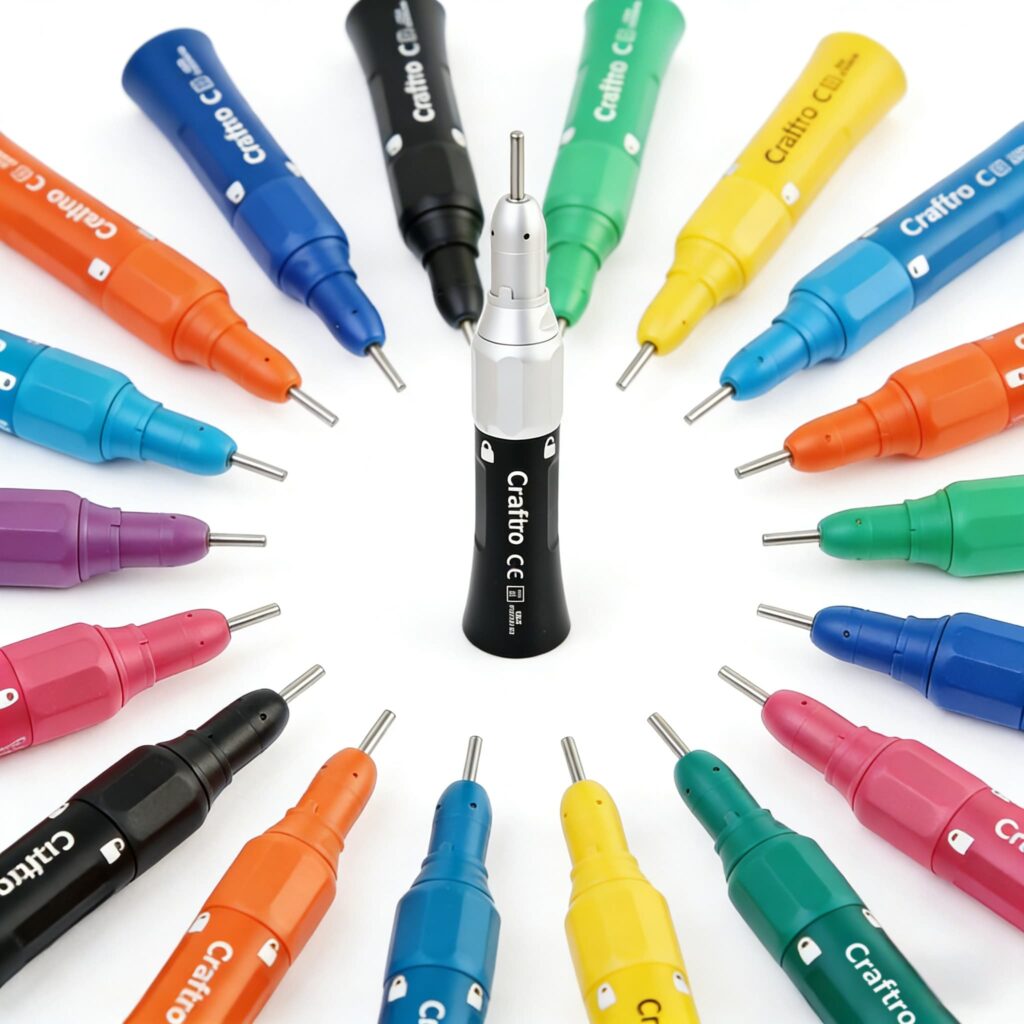
1:1 low-speed dental handpieces are essential, universally used tools in modern dental clinics and laboratories. Designed for stable, low-RPM operation, they provide reliable torque, smooth rotation, and high precision for polishing, restoration, prophylaxis, and denture processing. Available in straight and contra-angle formats, these handpieces support daily clinical and laboratory procedures with safety, efficiency, and consistency. This article explains their core design, structural differences, working principles, materials, and professional applications.
What Are 1:1 Low-Speed Dental Handpieces?
1:1 low-speed dental handpieces deliver output rotation that matches input speed, focusing on stability and control rather than high-speed cutting. This structure makes them ideal for delicate, safe, and repeatable tasks such as polishing, adjustment, cleaning, and material finishing. They operate with low noise, low vibration, and steady performance, supporting long hours of continuous use in professional environments.
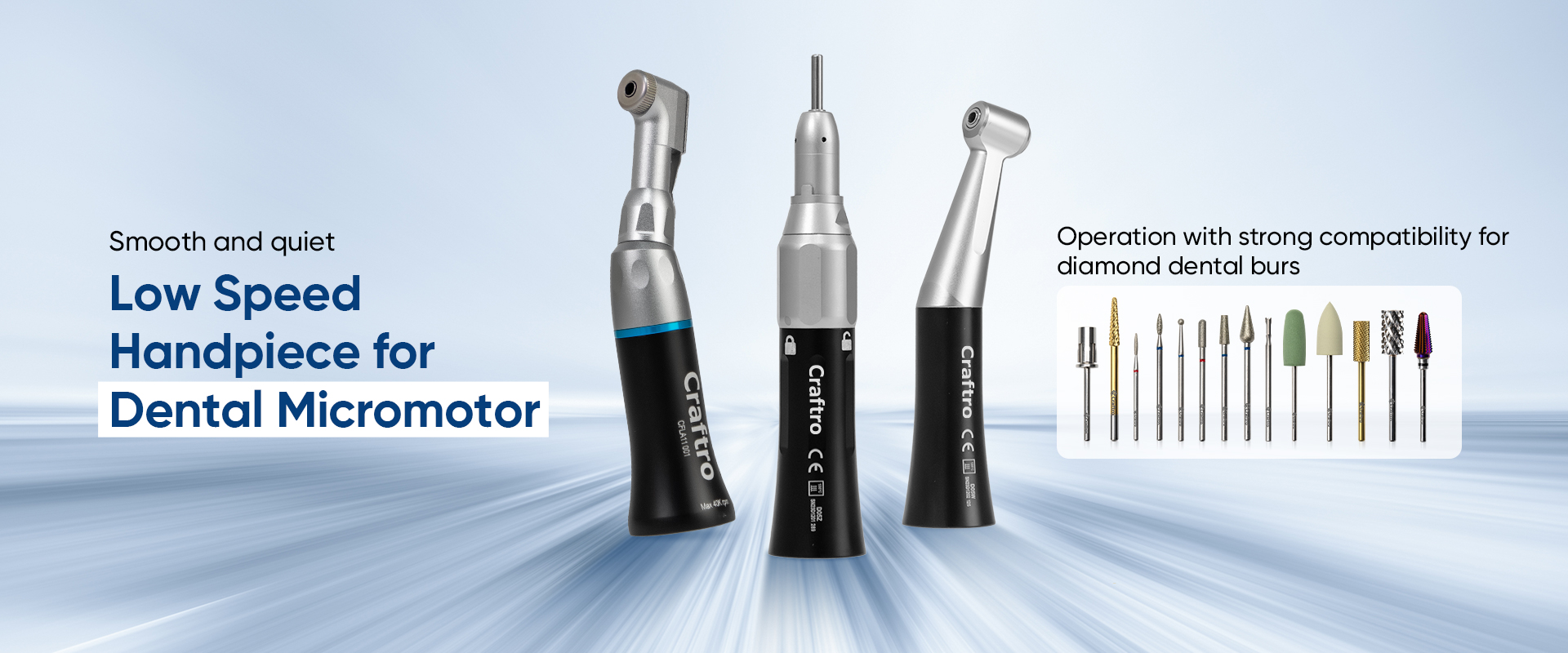
Straight Handpiece and Contra-Angle Handpiece Design Differences
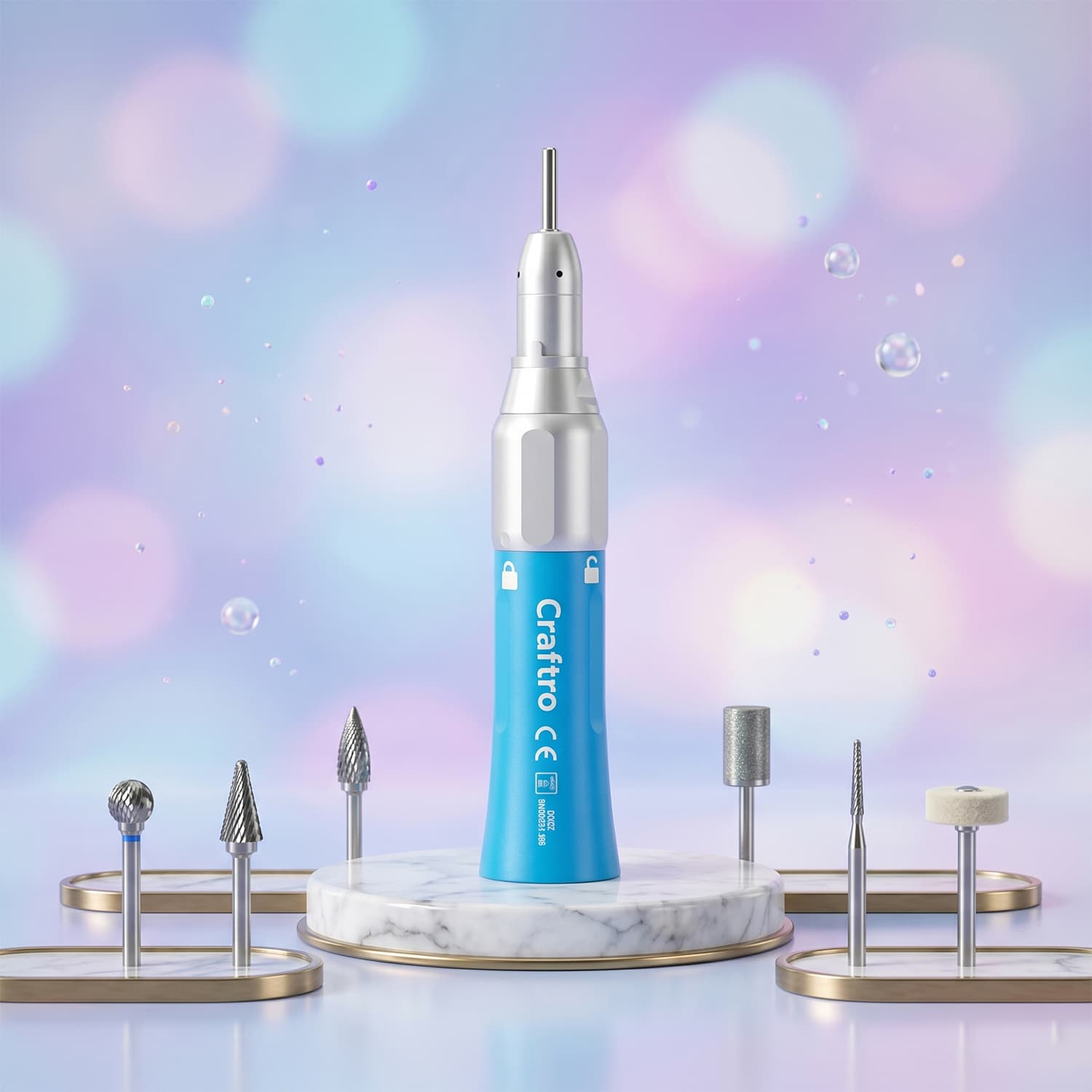
Straight handpieces use a linear, direct structure for strong accessibility and stable output. They are widely applied in laboratory processing, external polishing, resin trimming, and prophylaxis. Their straightforward design allows strong compatibility with various burs and polishing tools.
Contra-angle handpieces feature a curved head structure to improve access in narrow intraoral spaces. This ergonomic design supports precise operation during fillings, crown adjustment, restoration, and intraoral polishing. The angled structure reduces wrist fatigue and improves visibility during clinical treatment.
Core Performance Characteristics of Professional Low-Speed Handpieces
Stable torque is the most important performance feature of 1:1 low-speed systems. Consistent rotation under load ensures uniform polishing results and reduces damage to materials and prosthetics.
High-quality handpieces use precision bearings to reduce vibration and noise. Low vibration improves operational accuracy and increases patient comfort during treatment. Effective heat dissipation and durable connection systems further enhance reliability and service life.
Materials and Manufacturing Quality Standards
Medical-grade metal alloys and precision components ensure durability, biocompatibility, and resistance to high-temperature autoclaving. Professional handpieces must withstand repeated disinfection while maintaining balance and performance.
ISO9001, ISO13485, and MDSAP certifications represent strict quality management in design, production, and testing. These standards ensure safety, stability, and compliance with global clinical requirements for dental equipment.
Clinical and Laboratory Applications
1:1 low-speed handpieces are widely used in prophylaxis, composite polishing, crown and bridge adjustment, denture finishing, and intraoral restoration. In laboratories, they support material trimming, model modification, polishing, and prosthetic processing. With broad compatibility for burs and polishing tools, they become a universal and essential device for dental teams.