

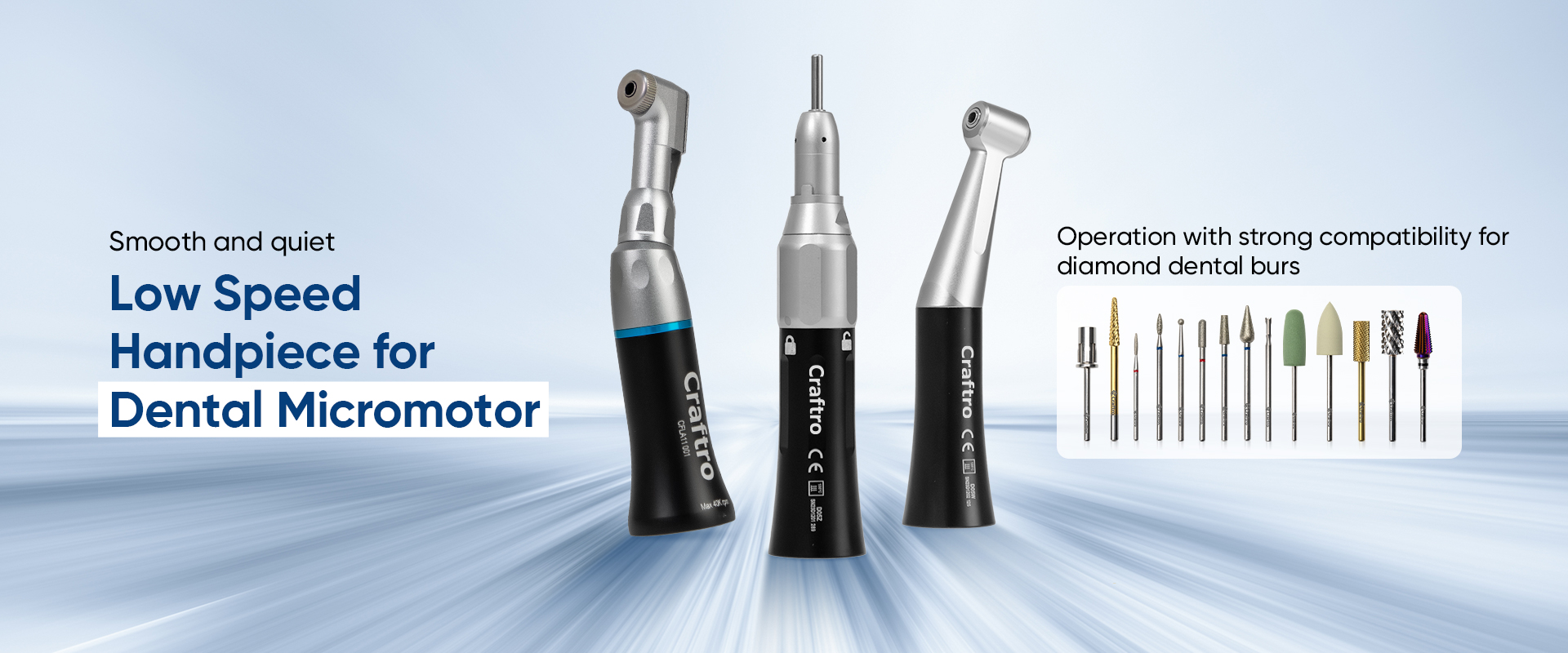

1:1 low-speed dental handpieces are core equipment for daily dental treatment and prosthetic processing. With stable torque, low vibration and controllable speed, they are widely used in polishing, restoration, cleaning and adjustment. The system includes straight handpieces for external and laboratory use and contra-angle handpieces for intraoral operations, forming a complete solution for clinical and laboratory scenarios. As a professional manufacturer of precision dental instruments, Shanghai Craftro Tech combines precision manufacturing experience and quality control systems to provide reliable low-speed handpiece solutions for global dental professionals. This article explains the transmission structure, working principles, clinical application points and standardized maintenance methods to help dental teams improve efficiency and extend equipment life.
Transmission Structure and Working Principle of 1:1 Low-Speed Systems
The 1:1 transmission ratio means the output speed is consistent with the input speed, providing stable and continuous torque without sudden fluctuation. This design is especially suitable for operations that require high stability and safety, such as polishing resin, adjusting dentures and cleaning dental surfaces.
The internal structure relies on precision drive shafts and bearings to transmit power. High-quality handpieces use balanced movement design to reduce wobble, ensuring smooth rotation even during long hours of continuous operation. This structure reduces fatigue for operators and improves comfort for patients.
Clinical Application Differences Between Straight and Contra-Angle Handpieces
Straight handpieces are mainly used for non-intraoral operations, including laboratory polishing, material trimming, model modification and external cleaning. The straight rod structure provides strong operability and is compatible with most low-speed burs and polishing heads.
Contra-angle handpieces are designed for intraoral use. The bent head improves visibility and accessibility in narrow spaces, supporting composite polishing, crown adjustment, restoration and other delicate treatments. The ergonomic structure helps dentists maintain a stable posture and improve treatment accuracy.

Standard Operation and Correct Usage Practices
Before use, check the connection between the handpiece and motor to ensure firm and stable fitting. Burs must be inserted in place and locked to avoid shaking or falling off during rotation.
During operation, maintain even and gentle pressure instead of strong force. Excessive pressure may cause bearing damage, speed fluctuation or material overheating. After use, remove burs immediately and perform preliminary cleaning to avoid residue curing.
Daily Maintenance and Long-Term Durability Management
Daily maintenance is the key to extending the service life of low-speed handpieces. After each use, clean the surface and internal passage with a suitable cleaning agent to remove impurities, body fluids and polishing residues.
High-quality dental handpieces support high-temperature autoclaving, but strict compliance with disinfection specifications is required to avoid damage to internal bearings and transmission parts. Regular inspection of rotation stability, noise and heat dissipation helps detect abnormalities early and reduce failure risks.
Quality Control and Certification Requirements for Professional Handpieces
Standard dental low-speed handpieces must use medical-grade materials that meet biocompatibility and corrosion resistance requirements. The shell and internal components must withstand repeated disinfection and long-term friction.
Shanghai Craftro Tech strictly follows ISO9001, ISO13485 and MDSAP certification systems throughout product design, production, assembly and testing. With a modern manufacturing base and professional R&D and quality control team, the company provides stable, safe and compliant dental handpieces for global clinical and laboratory markets.