
Selecting the optimal brushless micromotor relies on a critical engineering balance: while High Speed (RPM) determines processing velocity, Torque (N·cm) provides the necessary force to maintain that velocity under structural resistance. For B2B procurement managers and operators across the dental, manicure, and precision carving sectors, understanding how these two metrics interact—and how modern real-time algorithms manage their synchronization—is the key to maximizing operational efficiency, protecting expensive processing materials, and expanding equipment lifespans. Below, we break down the core technical specifications of premium micromotor systems to guide your next integration or purchasing decision.
1. What is RPM? (The Speed Factor)
RPM stands for Rotations Per Minute. It measures how many times the bur, grinding bit, or handpiece completes a full 360° spin in exactly 60 seconds. In industrial application, velocity dictates the smoothness of the surface finish and the speed of material removal.
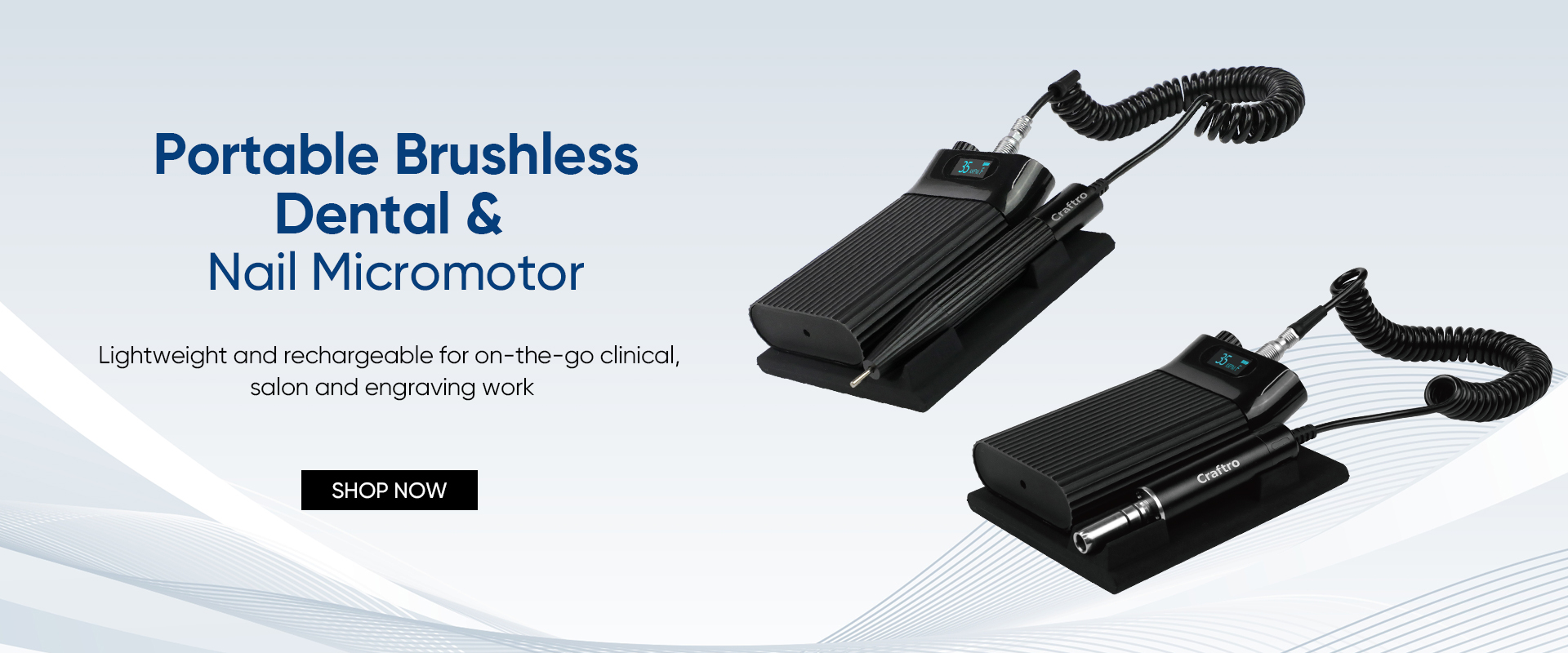
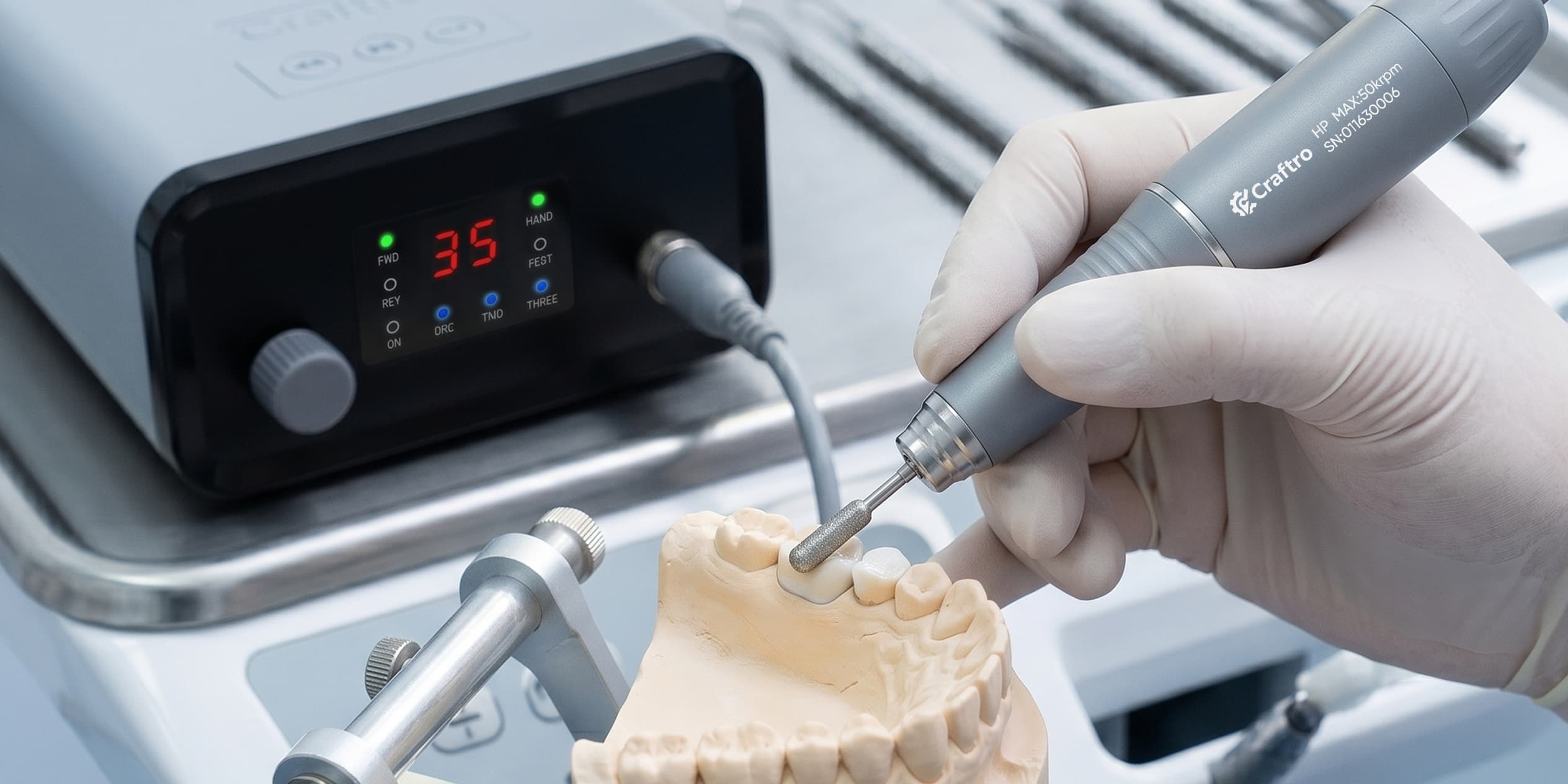
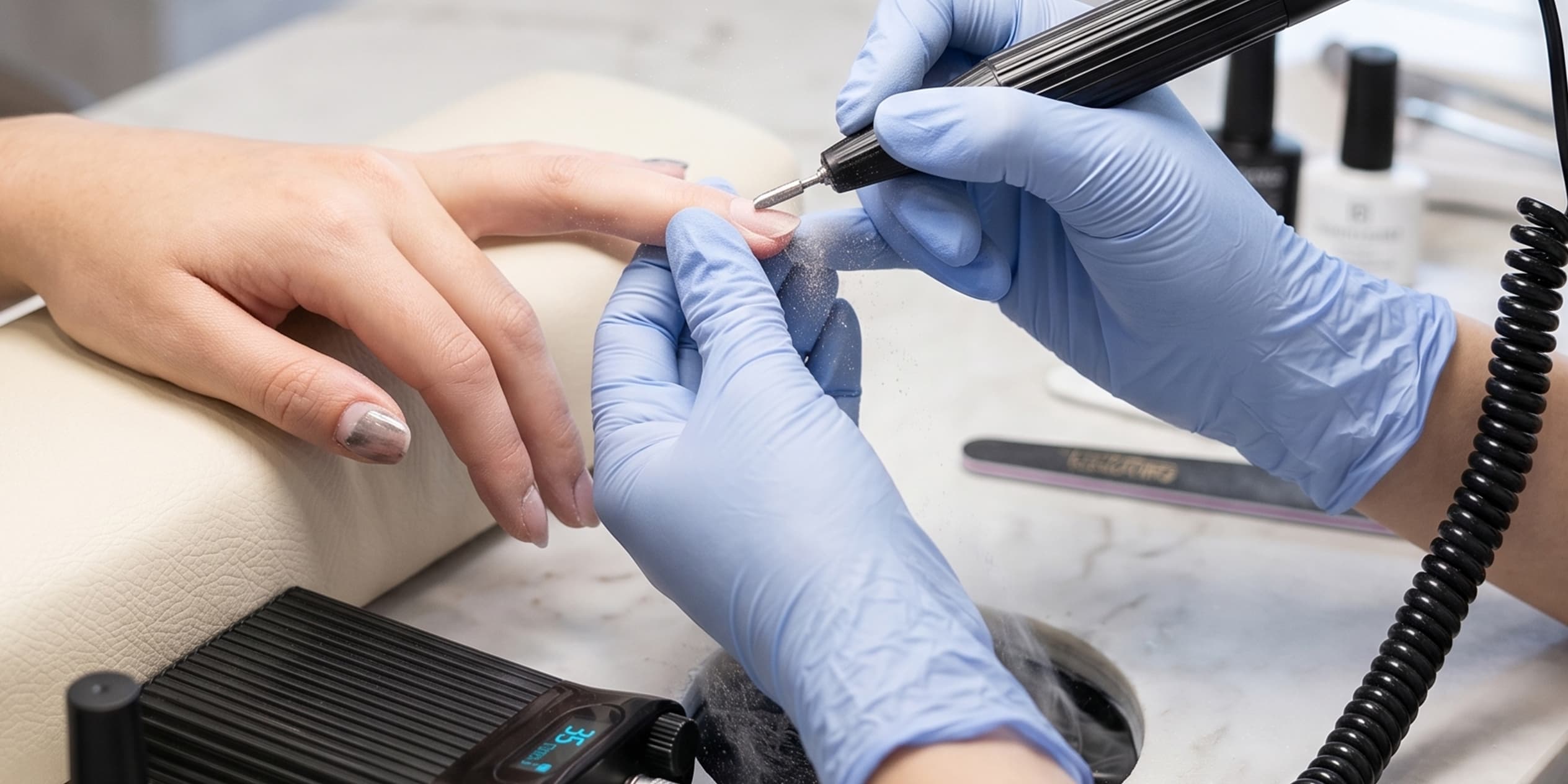
- 35,000 RPM (The Portable Gold Standard): Integrated into premium portable systems like the Craftro VK-MM5, this speed configuration serves as the benchmark for professional manicure procedures, precision dental adjustments, and detailed sculpture work. It delivers optimal kinetic energy to smoothly process acrylics, structured gels, or biological tissues without causing micro-fractures.
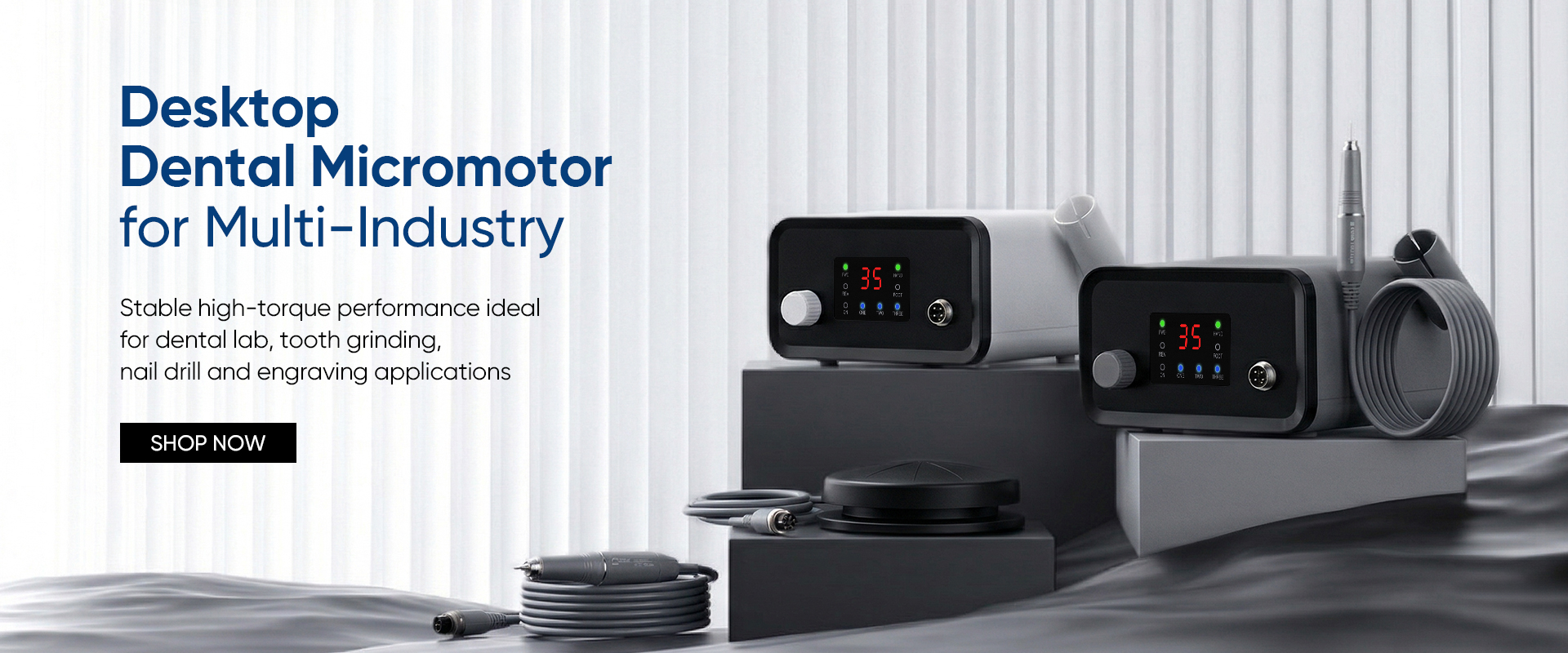
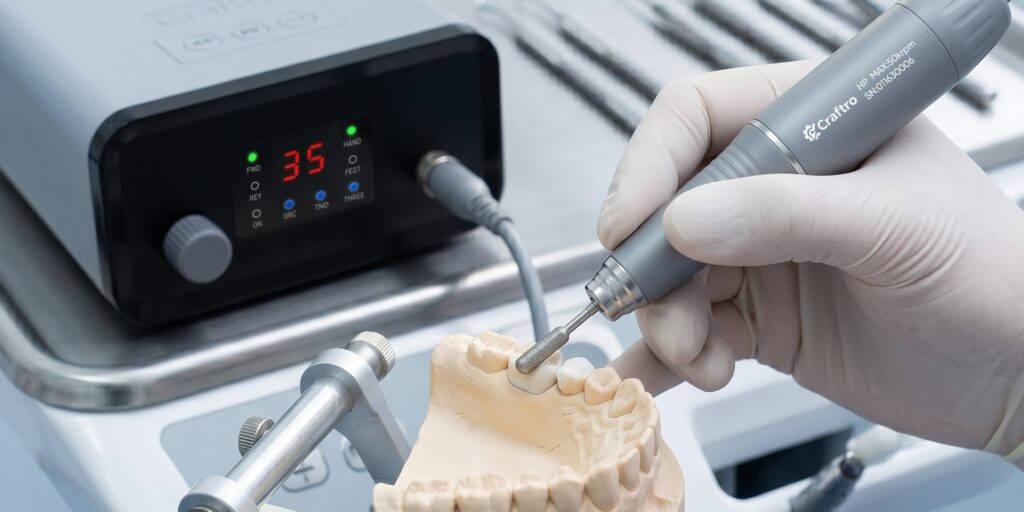
- 50,000 RPM (The Desktop Powerhouse): Engineered for heavy-duty lab stations like the Craftro VK-MM2, this ultra-high velocity is designed for rigorous industrial tasks, including cutting through robust alloys, zirconia structures, dense dental ceramics, or natural jade blocks.
2. What is Torque and N·cm? (The Muscle Factor)
If RPM defines the velocity of a micromotor under zero-load conditions, Torque represents the rotational force required to maintain that velocity when physical resistance is applied. In the professional equipment industry, this mechanical force is precisely measured in N·cm (Newton-centimeters).
Why Mechanical Force Prevents Workflow Interruptions
A common failure point in low-tier equipment occurs when an operator applies downward pressure on a dense substrate, causing the grinding head to stall, skip, or overheat. This issue stems entirely from inadequate torque output.
- When a platform delivers a high torque rating—such as the robust 8.0 N·cm output engineered into the Craftro VK-MM2 benchtop station—it provides the mechanical strength needed to sustain continuous cutting speeds even under heavy material loads.
- Superior torque limits mechanical vibration, ensuring that whether you are polishing complex jewelry alloys or refining structural dental casts, the handpiece maintains an ultra-stable, stall-free trajectory.
3. The Technical Synchronization: Speed vs. Torque
Engineering a premium workflow is not about selecting the highest standalone specification; it requires optimizing the relationship between rotational speed and torque for targeted application fields.
| Application Field | Operational RPM Range | Required Torque Profile | Recommended System Architecture |
|---|---|---|---|
| Professional Manicure & Nail Care | 20,000 – 35,000 RPM | Moderate / Balanced | Rechargeable Portable Units (e.g., VK-MM5 Series) |
| Dental Laboratory Manufacturing | 30,000 – 50,000 RPM | High Output (7.0 – 8.0 N·cm) | Heavy-Duty Industrial Desktop (e.g., VK-MM2) |
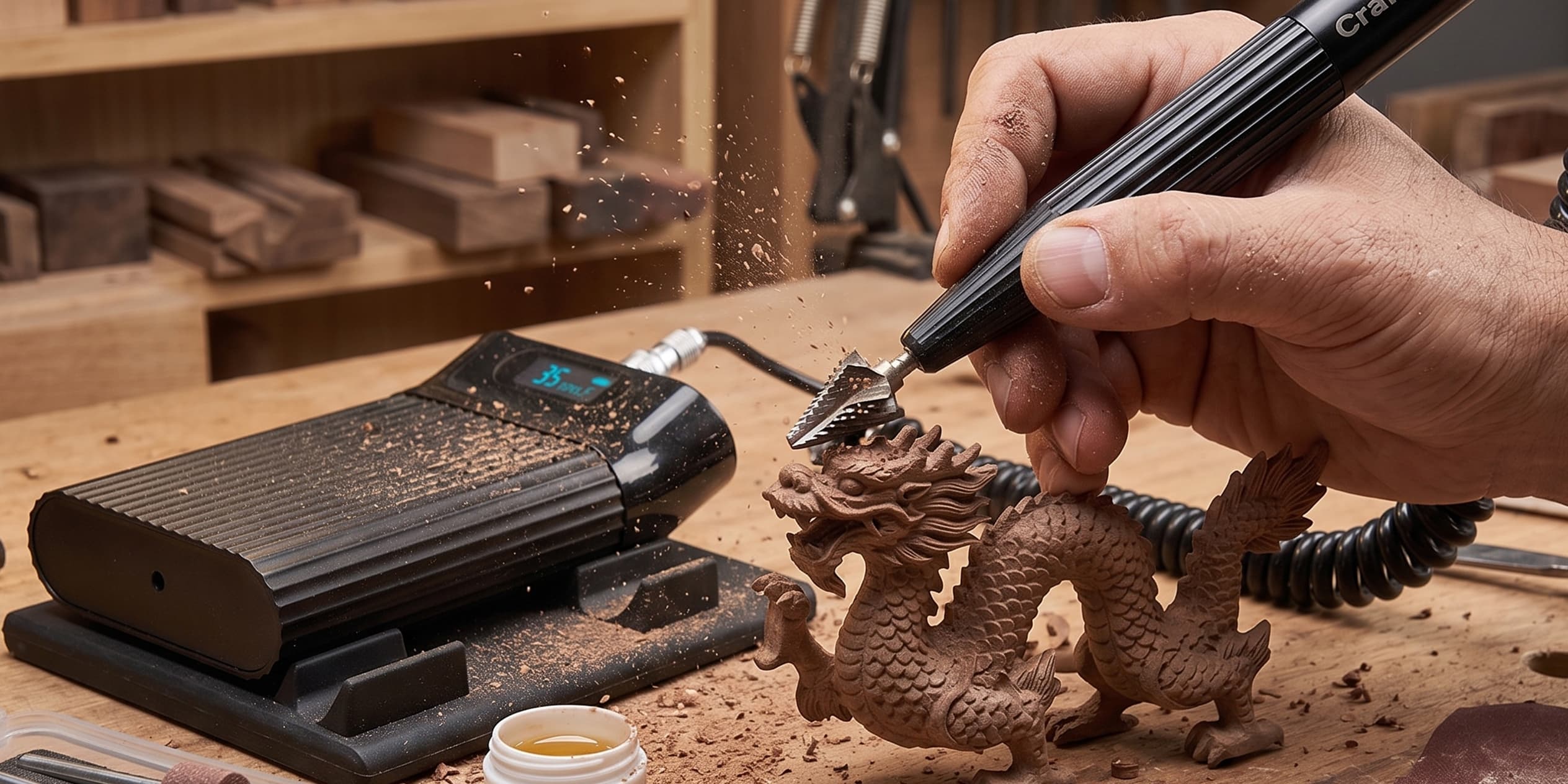
| Intricate Jewelry & Jade Carving | 10,000 – 40,000 RPM | High Stability (> 5.0 N·cm) | High-Torque Universal E-Type Compatibility Systems |
The Role of Smart Adaptive Algorithms
Modern commercial grinding hardware leverages closed-loop control microprocessors. Advanced units incorporate a smart algorithm that measures load variations in real-time. When the system encounters dense structural resistance, the processor instantly modulates voltage and current inputs to prevent RPM degradation. This technical integration ensures constant velocity, lowers carbon emissions, reduces power consumption, and protects the motor core from premature burnout.
4. Critical Compliance Metrics for B2B Procurement Officers
When sourcing industrial or medical-grade grinding equipment at an institutional or wholesale volume, operational specifications must be validated by manufacturing quality standards and international compliance framework:
- Quality Management Certifications: For procurement targeting clinical environments or medical laboratories, select facilities verified under ISO 13485 (Medical Devices Quality Management Systems) alongside MDSAP (Medical Device Single Audit Program) standards.
- Global Product Compliance: Hardware lines must completely adhere to CE, FCC, and ROHS compliance directives to clear cross-border regulatory borders in European and North American markets.
- Operational Infrastructure: Assess whether your business matrix prioritizes localized mobile operations (demanding high-capacity 2600mAh lithium-ion power boxes with 9-hour operational runtimes) or stationary benchtop integration (requiring stable 150W AC inputs coupled with multi-directional foot switches).
FAQ
What is the recommended specification for an E-type dental low-speed handpiece?
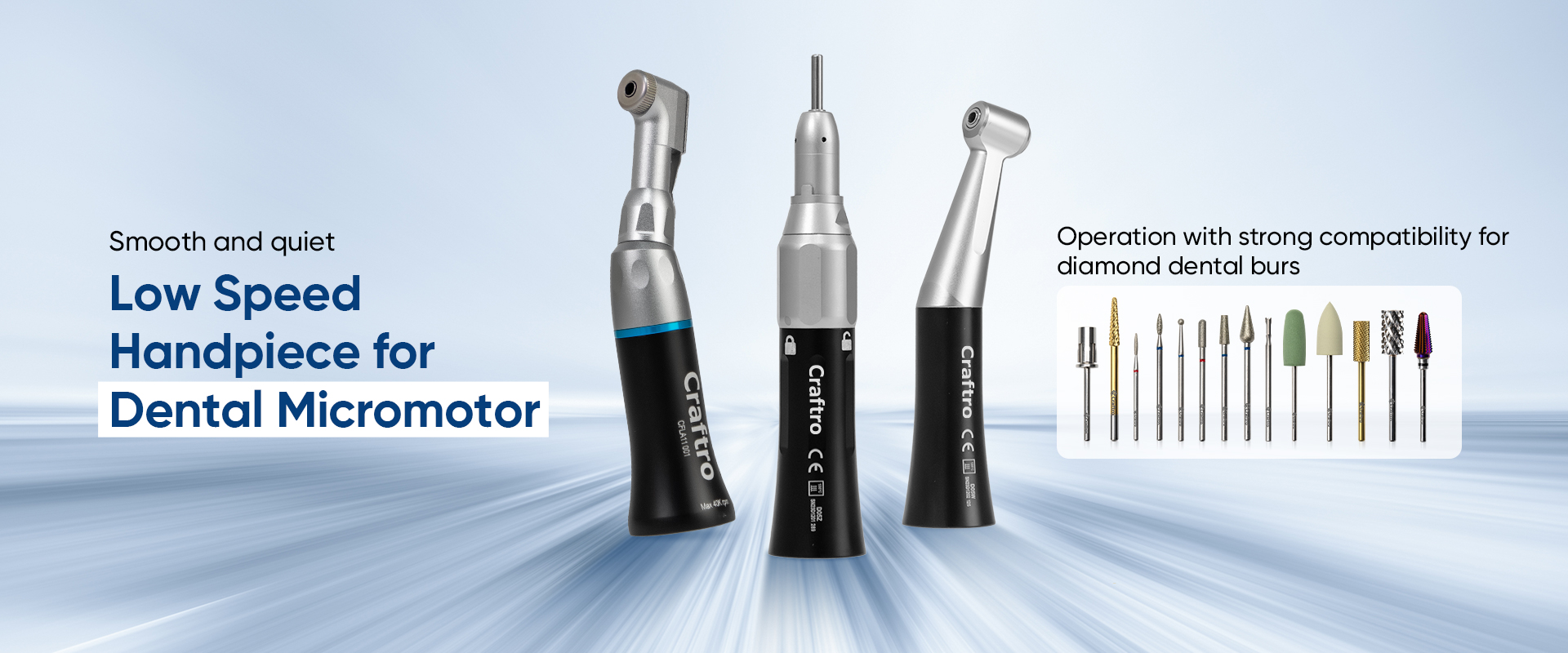
A professional universal E-type low-speed handpiece should operate efficiently across a regulated stability range up to 40,000 RPM, utilizing a 1:1 direct-drive configuration to deliver precise tactile response and continuous low-speed structural stability.
What operational advantages do brushless micromotors have over conventional brushed systems?
Brushless micromotor systems operate via electronic commutation, completely removing mechanical carbon brushes. This architectural improvement eliminates internal physical friction, resulting in “exceptionally lower noise and vibration parameters”, zero carbon dust accumulation, minimal heat dissipation, and a substantially expanded service lifecycle.